
Madrid on Foot in 3 Days, Exploring Historic Squares, Royal Palaces and Parks
Three days to discover Madrid while walking through grand squares, historic neighborhoods, monumental palaces and gardens. An itinerary with GPS routes and points of interest to explore with GeoFix World.
Madrid, a City to Experience on Foot
There are cities that surprise you with their monuments and others that captivate you with the atmosphere of their streets, squares and neighborhoods, Madrid manages to combine both of these qualities.
The Spanish capital is a lively city, rich in history, art and traditions, where grand monumental buildings coexist with markets, small cafés, gardens and neighborhoods that retain a strong identity.
Walking through Madrid means exploring very different places, from the squares of the historic center to the grand avenues, from royal residences to the parks where locals gather to spend their free time, it's a city that invites you to walk without rushing, because the most interesting discoveries often happen while moving from one monument to another, that's why we've chosen to tell the story of Madrid through a three-day itinerary, connecting the city's most representative places with the GPS tracks and points of interest available on GeoFix World.
The goal isn't just to visit the best-known attractions, but to discover a city where every neighborhood tells a different story.
Day One, the Historic Heart of Madrid
The best way to start discovering Madrid is to begin in its historic center, home to some of the capital's most representative squares and streets.
One of the city's iconic landmarks is Puerta del Sol, a square that has been one of Madrid's main meeting places for centuries, here you'll also find the famous kilometer zero marker of Spain's radial roads, a geographic reference that makes this place particularly interesting for those who enjoy observing how cities develop around their landmarks. From Puerta del Sol you can continue toward Plaza Mayor, one of Madrid's best-known monumental squares.
Surrounded by historic buildings and arcades, Plaza Mayor retains a special atmosphere, especially when you stop to admire the facades, balconies and daily life unfolding beneath the porticoes. Over the centuries, the square has hosted markets, celebrations and public events, today it's one of the most popular places among visitors to the city, but Madrid's historic center extends far beyond its grand squares.
The streets connecting these places pass through neighborhoods filled with small shops, traditional establishments and picturesque corners, where you can discover a more everyday side of the capital.
Among the most interesting areas is La Latina, known for its historic streets, small squares and numerous cafés and restaurants where locals and visitors gather.
Walking through this part of Madrid allows you to appreciate the contrast between the monumental character of the main squares and the more intimate atmosphere of the historic neighborhoods.
It's an ideal day to start finding your way around the city, recognize its main geographic landmarks and let yourself be surprised by the places you encounter along the route.
Day Two, the Royal Palace and Monumental Madrid
The second day can be dedicated to the more monumental side of the capital, where Madrid tells the story of its past through palaces, squares and grand historic buildings.
One of the main highlights is the Royal Palace, one of Europe's most important royal residences.
The building dominates a large area of the city center and impresses visitors with its size, architecture and richly decorated interiors, even without visiting the palace rooms, walking through the surrounding spaces allows you to appreciate the grandeur of the complex and the relationship between the building and the urban landscape.
Next to the Royal Palace stands Almudena Cathedral, a religious building that completes one of Madrid's most recognizable settings.
The two buildings represent an important reference point for understanding the capital's history and the role it has played as Spain's political and institutional center.
Nearby you'll also find Plaza de Oriente and the gardens surrounding the royal complex, pleasant spaces where you can stop to admire the architecture and watch the movement of the city.
Continuing your walk you can reach other iconic places, such as Plaza de España and Gran Vía.
The latter is one of Madrid's best-known streets, characterized by grand buildings, shops, theaters and urban architecture that reflects the city's transformations between the nineteenth and twentieth centuries.
Walking along Gran Vía means encountering a Madrid very different from its oldest neighborhoods, a dynamic, monumental city constantly filled with people.
This second day helps you understand how Madrid has grown over time, moving from the streets of its historic center to the grand spaces that characterize a European capital.
Day Three, Retiro Park and Madrid's Great Museums
After exploring the historic center and the main monuments, the third day can be dedicated to a quieter side of Madrid, with gardens, tree-lined avenues, museums and places where you can stop to admire the scenery.
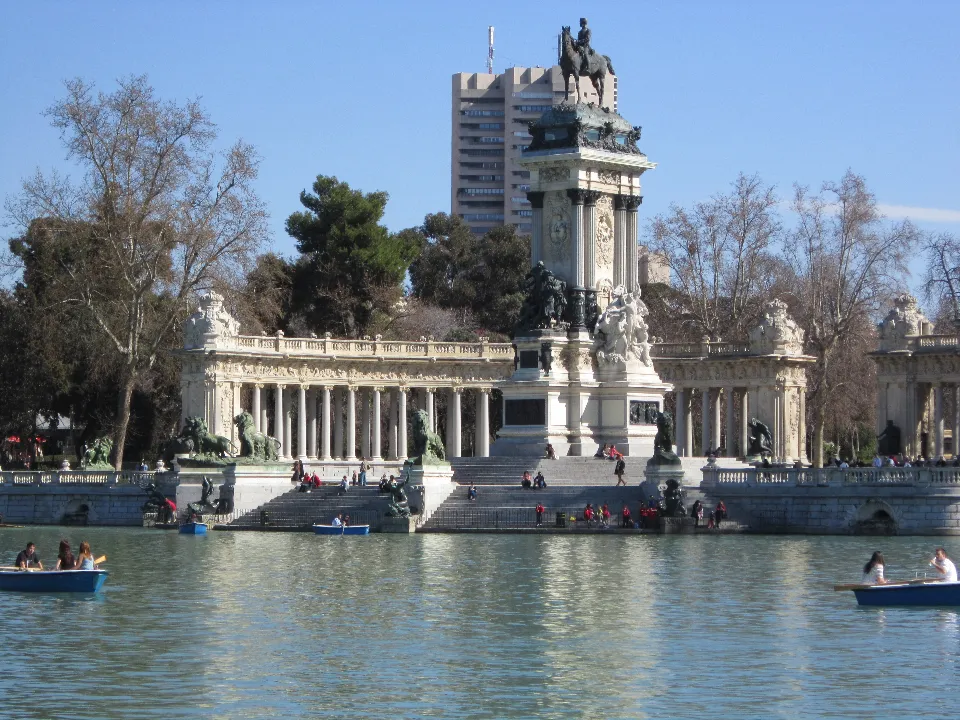
One of the main highlights is Retiro Park, one of the capital's best-known green spaces. The park covers a vast area in the heart of the city and plays an important role in the daily lives of Madrid's residents, with paths, gardens, monuments and wide spaces dedicated to walking, among its most picturesque spots is the large artificial lake, dominated by the monument to Alfonso XII. The monument features an imposing equestrian statue, a tall pedestal and a semicircular colonnade overlooking the water, creating one of the park's most recognizable scenes, this is precisely the place shown in the photograph accompanying our article.
The small boats crossing the lake, the people sitting on the monument's steps and the trees surrounding the water reveal a Madrid different from the one found in its grand squares, a city where even a park can become a destination worth remembering.
Walking through Retiro Park you'll encounter other interesting places, including the Palacio de Cristal, a glass and metal structure surrounded by greenery, and numerous gardens that invite you to explore the park without necessarily following a predetermined route.
Nearby you'll also find one of the city's most important cultural areas, home to the Prado Museum, the Reina Sofía Museum and the Thyssen-Bornemisza Museum.
These museums house fundamental works of European and Spanish art history, offering the opportunity to enrich the day with a cultural visit.
There's no need to visit them all on the same day, in fact, choosing one museum and giving it the time it deserves can make the experience more enjoyable.
The third day thus becomes an opportunity to discover a Madrid where art, nature and city life come together.
Three Days to Discover a City with Many Identities
Madrid is a city that constantly changes character as you walk through it.
The historic center tells the story of the capital's origins through squares, markets and traditional neighborhoods, the Royal Palace area reveals the city's monumental character, while Retiro Park and the great museums offer the opportunity to discover its artistic heritage and green spaces.
Organizing these visits over several days helps you manage your time and better understand the different areas of the city, but traveling isn't just about reaching the main attractions, often it's the small detours that make an itinerary interesting, a square discovered by chance, a building we didn't know about or a garden where we decide to stop.
It's precisely to preserve these references that maps and GPS waypoints can become useful tools even during an urban trip.
From the Logbook to GeoFix World
An itinerary described in an article allows you to discover places before leaving, but viewing them on a map helps you understand their locations and organize your movements.
On GeoFix World we've published an experience dedicated to Madrid, organized into three GPS tracks and enriched with 28 waypoints.
The tracks allow you to view the routes on the map, while the waypoints identify points of interest that can become useful references during your visit.
This makes it possible to complement the story of the city with a geographic representation of the journey, moving from descriptions of monuments to their actual locations.
The routes can be consulted before departure, to become familiar with the areas to explore, or used as a reference during the visit.
It's important to remember that a GPS itinerary doesn't replace checking actual access conditions, monument opening hours or any changes to pedestrian routes.
The advantage is being able to preserve an overview of the journey, recognizing the places and geographic references you want to reach.
Madrid, a City to Remember
Three days aren't enough to discover every corner of Madrid, but they represent a good starting point for exploring its identity.
There are the grand monuments, historic squares, palaces and museums, but there are also the small places we encounter without having planned to visit them.
A café table in a square, a particularly picturesque street, a view admired during a walk or the reflection of the monument to Alfonso XII in the waters of Retiro Park, these are moments that often become the most personal memories of a journey.
Saving the geographic locations of the places that have impressed us means being able to find them again in the future, even when we don't remember the street name or the route we followed to reach them.
With GeoFix we can add these references to our GPS tracks, building a personal map of the places we've visited.
Because every journey is made up of destinations, but also of discoveries we hadn't anticipated.
Take Madrid with You
With GeoFix World you can explore experiences, routes and points of interest, while with GeoFix GPS you can record your tracks, save waypoints and preserve the locations of the places you want to remember.
Discover the itineraries available on GeoFix World and start planning your next journey.
GeoFix, wherever you go.