
Barcelona on Foot in 3 Days, Exploring Gaudí, Historic Neighborhoods and the Mediterranean
Three days to discover Barcelona while walking through medieval streets, modernist architecture, grand squares and views of the Mediterranean. An itinerary with GPS routes and points of interest to explore with GeoFix World.
Barcelona, a City to Discover on Foot
There are cities you visit by following a list of monuments and others you discover mainly by walking, allowing yourself to be surprised by streets, squares and neighborhoods that change character around every corner.
Barcelona belongs to both categories.
It's a city where medieval heritage, modernist architecture, grand avenues and neighborhoods overlooking the Mediterranean coexist, a place where walking just a few streets away from the best-known attractions is enough to discover completely different atmospheres.
Walking through Barcelona means traveling through centuries of history, moving from the narrow streets of the Gothic Quarter to the surprising shapes of Antoni Gaudí's creations, reaching the hills overlooking the city and finally finding yourself by the sea.
That's why we've organized a three-day itinerary, divided into three GPS routes and enriched with 37 waypoints, designed to explore the city through its most representative places.
It's not just a list of things to see, but a way to connect monuments, neighborhoods and points of interest, creating a journey that unfolds day after day.
Day One, from the Gothic Quarter to the Sea
Your first encounter with Barcelona can begin in its historic center, where the city still preserves an important part of its origins.
The Gothic Quarter is a maze of narrow streets, squares and ancient buildings, walking through these streets you'll encounter medieval architecture, small courtyards and picturesque corners that reveal a Barcelona very different from the one found along its grand modern avenues.
One of the main landmarks is Barcelona Cathedral, dedicated to the Holy Cross and Saint Eulalia, a building that dominates the historic heart of the city and represents one of the neighborhood's most recognizable sights, but the charm of this area goes beyond its monuments, it's worth spending time exploring the quieter streets, stopping in small squares, observing the details of the facades and discovering how the historic center continues to be a vibrant part of the city.
As you continue toward the Born neighborhood, the atmosphere gradually changes, the Born is known for its distinctive streets, cafés, shops and historic buildings, including the Basilica of Santa Maria del Mar, one of the most important examples of Catalan Gothic architecture.
It's a neighborhood that invites you to walk without rushing, alternating visits to the best-known landmarks with small detours to discover less obvious corners, from here, the day can continue toward the waterfront, where Barcelona reveals another of its distinctive characteristics.
The Mediterranean isn't just the city's backdrop, it's a fundamental part of its identity, with seaside promenades, beaches and open spaces that contrast with the narrow streets of the historic center, the first route therefore allows you to experience very different environments, from medieval heritage to historic neighborhoods, all the way to the areas overlooking the sea.
GPS route for day one, Gothic Quarter, Born and the sea, approximately 5.1 km.
Day Two, Discovering Gaudí and Catalan Modernism
If the historic center tells the story of Barcelona's origins, the second day introduces one of the aspects that have made the city famous around the world, modernist architecture.
Between the late nineteenth and early twentieth centuries, Barcelona underwent a period of major urban and cultural transformation, during which architects and artists helped create an original artistic language.
The best-known name is certainly Antoni Gaudí, whose works have become an integral part of the city's identity, one of the most representative stops is Casa Batlló, along Passeig de Gràcia, a building that stands out for its flowing shapes, colors and nature-inspired details. Looking at its facade, you immediately understand how far Gaudí's architecture departs from traditional geometry, transforming an urban building into something that almost seems to belong to a fantasy world.
But it's above all the Sagrada Família that represents one of Barcelona's most recognizable symbols, the basilica, to which Gaudí devoted a fundamental part of his life, combines extraordinary architectural complexity with a language rich in natural and symbolic references. Viewed from the outside, its towers, facades and numerous decorative details make the visit a special experience.
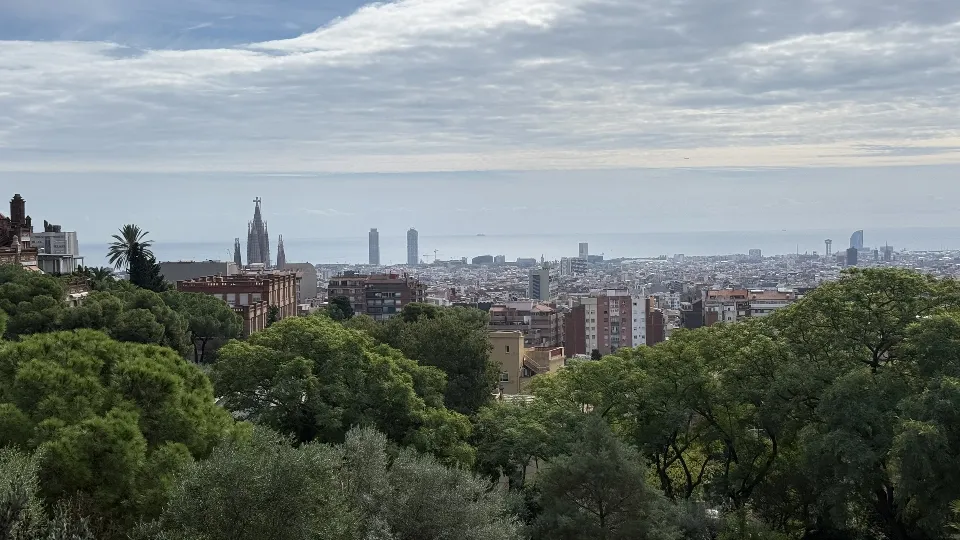
The route dedicated to modernism also includes Park Güell, where architecture interacts with the landscape and green spaces, here the shapes, mosaics and structures designed by Gaudí blend into an environment from which you can also admire panoramic views of the city. It's one of those places where it's worth stopping, not only to observe the architectural works, but also to appreciate the relationship between Barcelona and its surrounding landscape.
This second day offers the opportunity to discover a creative city, where architecture isn't simply something to observe, but becomes part of the travel experience.
For visits inside the most popular monuments, it's advisable to check opening hours, admission procedures and ticket availability in advance.
GPS route for day two, Modernism and Gaudí, approximately 7.2 km.
Day Three, Montjuïc and the Mediterranean
After exploring the historic center and discovering modernist architecture, the third day is dedicated to a different side of Barcelona, one of panoramic views, hills and open spaces.
Montjuïc is one of the most interesting areas from which to observe the city from a different perspective.
The hill rises in the southwestern part of Barcelona and is home to gardens, cultural venues, historic buildings and several panoramic viewpoints.
Walking through this area means leaving behind the pace of the busiest streets, crossing green spaces and discovering views that help you better understand the city's geography.
From certain points you can see the port, the urban landscape and the Mediterranean, a panorama that tells the story of Barcelona's relationship with the sea.
Among the area's best-known landmarks are Montjuïc Castle and the spaces connected to the major urban transformations that shaped the hill during the twentieth century.
Montjuïc also offers the opportunity to appreciate an aspect that is often overlooked during a visit to Barcelona, the presence of parks, gardens and walking paths that invite you to slow down and observe the landscape.
The connection with the Mediterranean completes the story of the city.
After discovering the medieval streets and Gaudí's creations, the journey ends by looking at Barcelona as a whole, a city stretching between the hills and the sea.
It's a particularly fitting conclusion to a walking itinerary, because it allows you to recognize, from a broader perspective, many of the places explored during the previous days.
GPS route for day three, Montjuïc and the Mediterranean, approximately 7.0 km.
Three Days, Three Routes and 37 Places to Discover
Exploring a city on foot allows you to notice details that often go unnoticed when moving quickly from one attraction to another.
But organizing an urban itinerary can take time, especially when you want to connect monuments, neighborhoods and panoramic viewpoints without losing your bearings along the way.
That's why we've brought together the Barcelona experience on GeoFix World.
The itinerary includes three GPS tracks, one for each day, covering a total of approximately 19.3 kilometers, and 37 waypoints identifying points of interest distributed throughout the journey.
The tracks allow you to view the planned routes on the map, while the waypoints help you recognize the places to visit and save their geographic locations.
The result is a representation of the journey that combines the daily schedule with the city's geographic dimension.
Not just what to see, but also where places are located and how they're distributed along the routes.
The indicated distances refer to the published GPS tracks, actual walking distances may vary depending on detours, access to monuments and the choices made during your visit.
From the Story to the Map, Discover Barcelona on GeoFix World
Reading an itinerary allows you to imagine a journey, viewing it on a map helps you better understand how it's organized.
On GeoFix World you can explore the Barcelona experience, consult the GPS tracks and identify the waypoints associated with points of interest.
Each route represents one day, from the historic center to modernist architecture, all the way to Montjuïc hill and views of the Mediterranean.
The experience is also available as a GeoFix package, allowing you to take the geographic data of your journey with you through the app.
Explore the Barcelona itinerary on GeoFix World
One City, So Many Places to Remember
During a trip it's not always the most famous monuments that leave the strongest memories, sometimes it's a small square discovered by chance, a particularly picturesque street, an architectural detail or a spot from which we've seen the city in a different light.
Barcelona constantly offers opportunities like these, especially to those who choose to discover it on foot.
GPS routes help organize the days, waypoints allow you to preserve geographic references, but it's the experiences lived along the way that make every journey personal.
And this is precisely the idea behind GeoFix, using technology to explore the world around us, discover new places and preserve those we want to remember.
Three days may not be enough to get to know all of Barcelona, but they can be an excellent starting point for discovering it, one step at a time.
Take Your Journey with You
With GeoFix World you can discover itineraries, routes and points of interest, while with GeoFix GPS you can record your tracks, save waypoints and preserve the geographic references of the places you visit.
Discover the Barcelona itinerary on GeoFix World and start planning your next journey.
GeoFix, wherever you go.